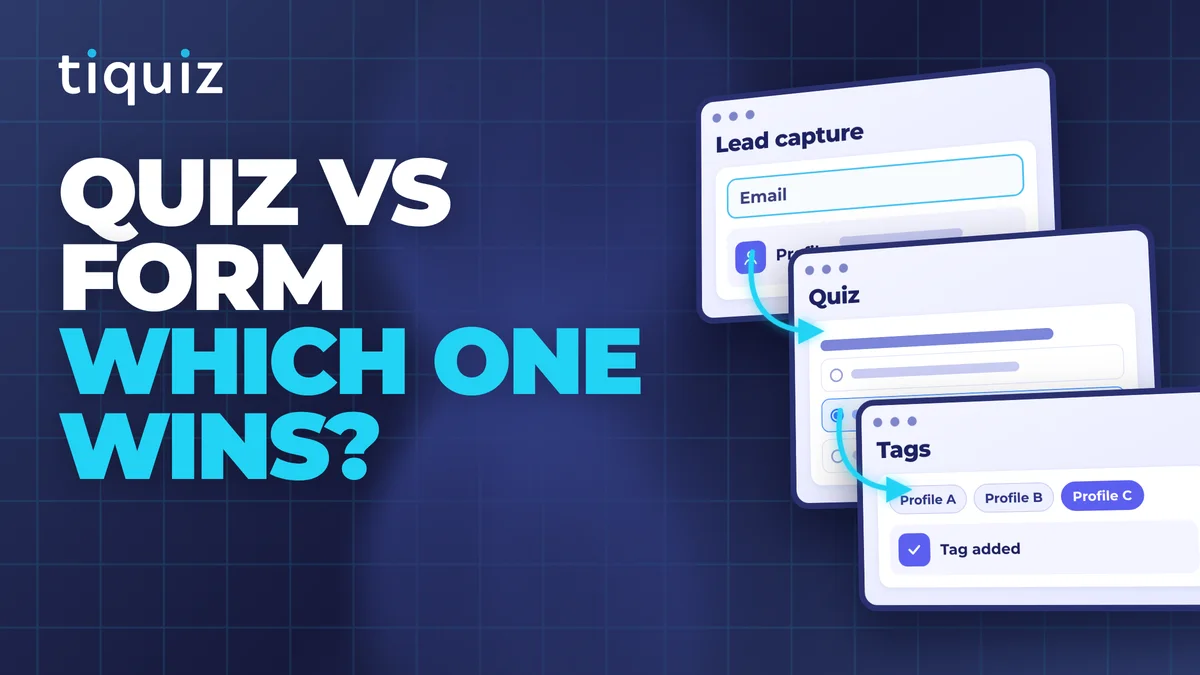
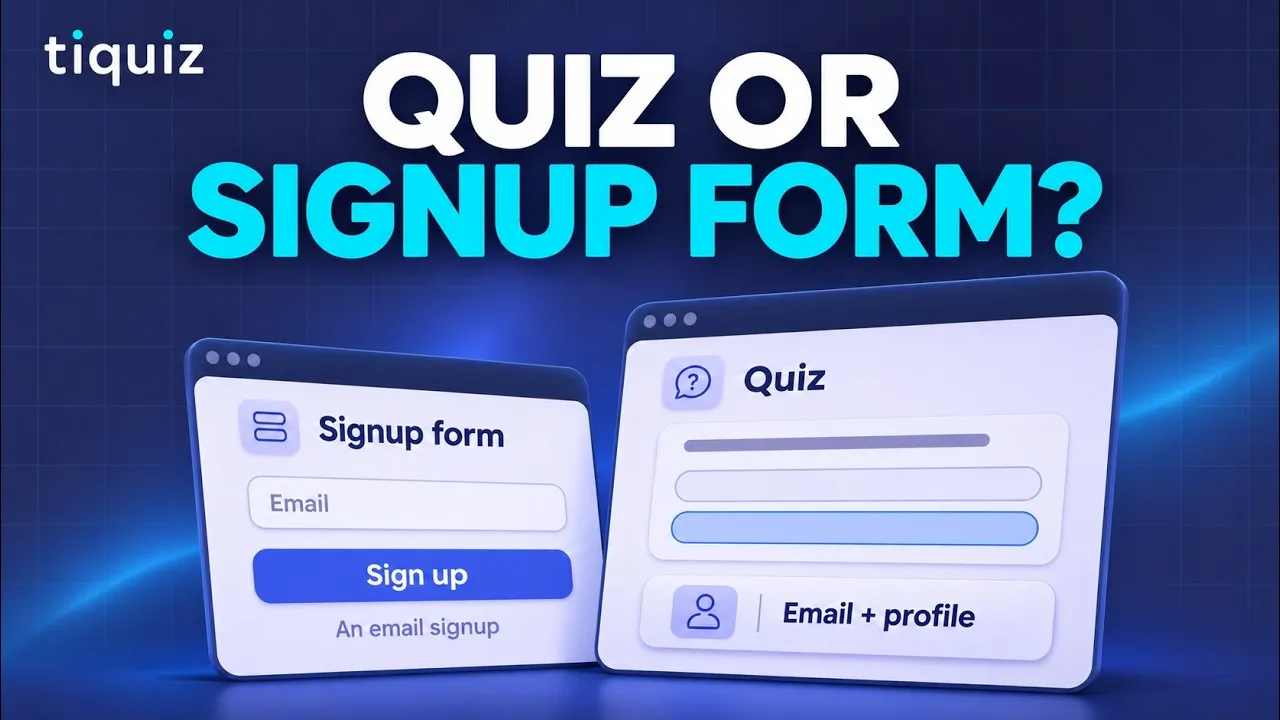
You have a signup form. It works, more or less. And you keep reading that interactive quizzes are replacing forms for lead generation. Before you rebuild anything, here's what the numbers measure, what they don't, and a simple way to decide.
Full disclosure: I built Tiquiz, a quiz builder. So I've sourced every number, and I tell you when a form is the better choice.
Quiz vs form: what each one asks from a visitor
A form and a quiz both end with an email field. Everything before that field is different.
| Form | Quiz | |
|---|---|---|
| What the visitor does | Types an email, sometimes a first name | Answers a few questions about themselves, then leaves an email |
| What they get right away | A promise: a PDF, a newsletter, a discount | A result about themselves: a profile or a score |
| Time asked | A few seconds | One to two minutes |
| What you know at signup | An email | An email, a profile or a score, and every answer |
| First email you can send | The same one to everyone | One written for that result |
A quiz asks for more time. The whole question is whether what you get back is worth those two minutes.
Quiz vs form conversion rates: what the numbers count
You'll see "quizzes convert at 40%" next to "forms convert at 3%". Those two numbers don't count the same people. Always ask: percent of what?
| Number | What it counts | Who measured it |
|---|---|---|
| 6.6% | Median conversion rate of landing pages, all industries and all goals (signups, but also clicks and purchases) | Unbounce, 41,000+ landing pages, 2024 edition |
| 7.85% | Of quiz VISITORS leave their details (11.28% when the quiz has its own page) | ConvertFlow, 1,063 customer campaigns, September 2026 |
| 40.1% | Of people who START a quiz leave their email | Interact, across its customers' quizzes, updated September 2026 |
| 50.2% | Of people who START a quiz leave their email (32.4% of people who see the first page) | Tiquiz, 6,735 quiz views, October 15 to November 14, 2026 |
Read it honestly:
- Per visitor, a quiz does a bit better than an average landing page, not ten times better. 7.85% against 6.6%, measured by two different companies on two different sets of customers.
- The 40% and 50% count from the first click on "Start". They tell you that once someone answers a question, they usually go to the end. They don't compare to a form's rate per visitor.
- Every one of these numbers comes from a vendor measuring its own customers, Tiquiz included. I found no independent study that tests the same audience on a form and on a quiz.
So the fair claim is this one: a quiz collects at least as many emails per visitor as a typical page, and often more. Its real advantage is somewhere else.
Why people finish a quiz when they skip a form
Two well-documented mechanisms explain why two minutes of questions don't scare people away.
We like talking about ourselves. In 2012, Harvard researchers Diana Tamir and Jason Mitchell let volunteers choose between questions about themselves, about someone else, or about facts, each paying a few cents. Participants gave up an average of 17% of their potential earnings to answer about themselves. A form asks for something. A quiz starts by listening.
Curiosity wants closure. George Loewenstein described it in 1994: curiosity appears when we notice a gap between what we know and what we want to know. After five answers, the result exists, one click away. That's the moment the email field appears.
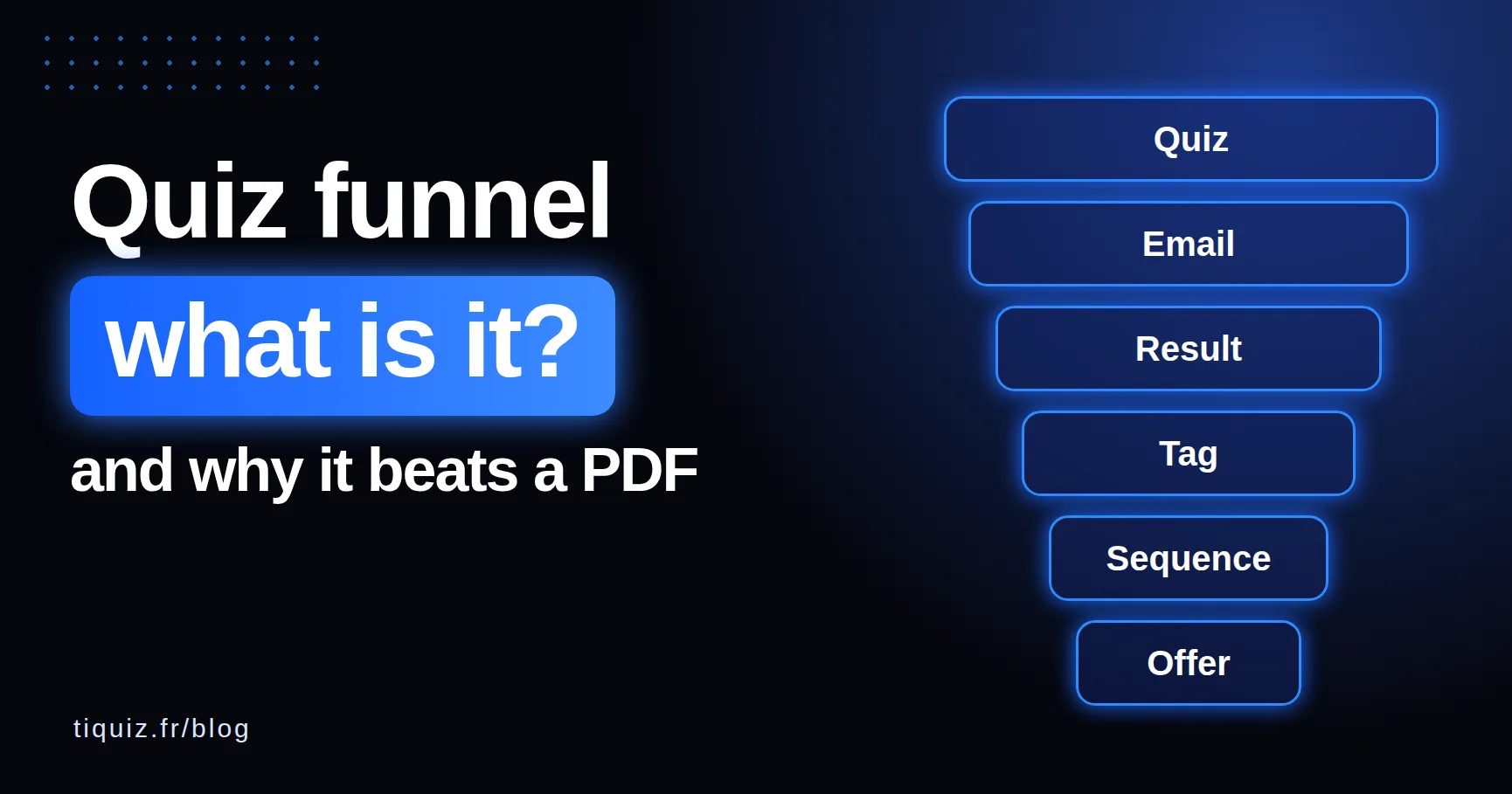
The full mechanics, with a complete example, are in what is a quiz funnel.
What a quiz gives you that a form can't: the segment
This is the part that changes your email marketing. A form gives you three hundred addresses. A quiz gives you three hundred people sorted by what they told you.
Mailchimp measured what sorting changes. Across about 11,000 campaigns sent to a segment, emails got about twice as many clicks (100.95% more) as the emails the same users sent to their whole list. The data dates from 2017 and the gap varies with the criterion, but the direction is steady: an email about someone's own problem gets opened and clicked more.
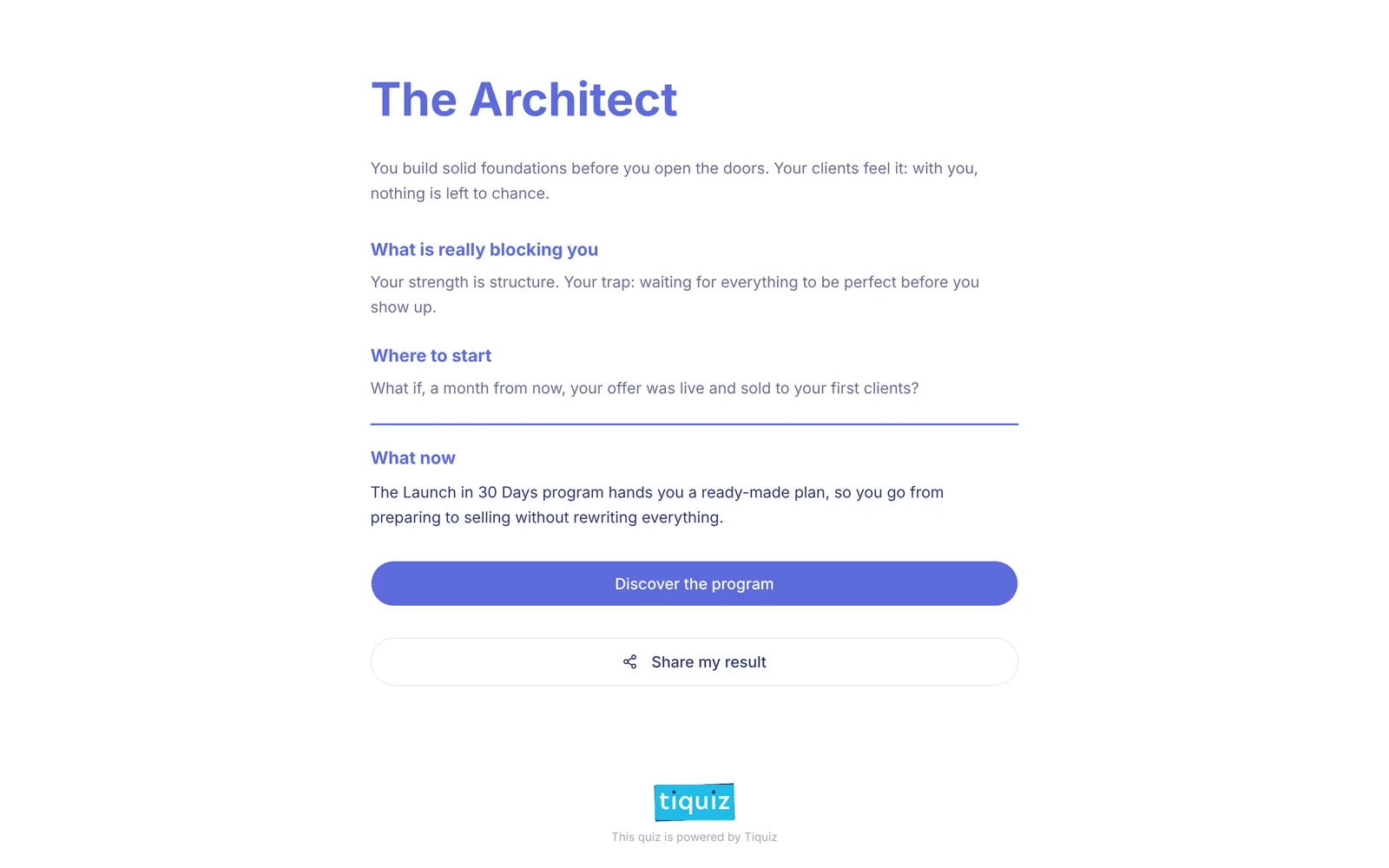
With a form, you can segment later, by watching who clicks on what. It takes weeks and several emails. With a quiz, the tag is there at second one.
When a form is the better choice than a quiz
Keep your form, and don't add a tool, when:
- Everyone gets the same thing. One offer, one audience, one welcome sequence. A segment you won't use is two minutes taken from your visitor for nothing.
- The visitor already wants the thing. A waitlist, a webinar registration, a discount code at checkout. They've decided: get out of the way.
- The context is too short. A popup on exit, a footer signup. Nobody starts a two-minute quiz on their way out.
When a quiz is the better choice than a form
A quiz earns its two minutes when:
- Your audience has different problems, and you'd write a different email to each group if you knew who was who.
- Your content brings visitors who leave without signing up. "Get my newsletter" is a weak reason. "Find out which type you are" is a reason about them.
- You sell through conversations. A coach or a freelancer who reads the answers before a call starts that call two steps ahead.
- Your list has gone quiet. Sending a quiz to current subscribers sorts them in one email.
How to move from a form to a quiz without rebuilding everything
- Keep your email tool and your form. The quiz doesn't replace them, it sits in front.
- Pick two or three segments that match real differences in what you'd send or sell. Not seven.
- Write five to seven questions that sort people into those segments, and one result page per segment with a single next step.
- Connect the quiz to your email tool so each lead arrives with the tag of their result, and write the first email for each tag.
- Put the quiz where the form converts worst: end of articles, link in bio, a message to your current list. Compare after a month.
On Tiquiz, the AI writes the questions, the results and the follow-up emails from one sentence about your audience, and the free plan includes one quiz and one connection to GoHighLevel, Systeme.io, Brevo or a webhook. The step-by-step is in how to create a quiz for email marketing.
FAQ · quiz vs form for lead generation
Do quizzes convert better than forms?
Per visitor, a little: ConvertFlow measures 7.85% of quiz visitors leaving their details, against a 6.6% median for landing pages of all kinds at Unbounce. The larger numbers you see (40% to 50%) count from people who started the quiz, not from every visitor.
Why are interactive quizzes replacing forms for lead generation?
Because a quiz gives the visitor a result about themselves in exchange for their email, and gives the business a segment: each lead arrives with a profile or a score, so the follow-up emails can be different for each group.
Is a quiz too long compared with a form?
It takes one to two minutes instead of a few seconds. On Tiquiz, 78.8% of people who start a quiz finish it. It's too long when the visitor has already decided, for example on a waitlist or at checkout.
Can I use a quiz and a form together?
Yes. Keep the form where people have already decided (waitlist, webinar, footer), and put the quiz where they haven't: at the end of your content, in your bio, in an email to your list.
Sources
- Unbounce, "Conversion Benchmark Report" (2024 edition, 41,000+ landing pages): unbounce.com
- ConvertFlow, "Lead Generation Quiz Funnel Benchmark" (September 2026): convertflow.com
- Interact, "Quiz Conversion Rate Report" (updated September 8, 2026): tryinteract.com
- Tiquiz, our own numbers from October 15 to November 14, 2026: quiz conversion rate
- Tamir and Mitchell, "Disclosing information about the self is intrinsically rewarding", PNAS, 2012: doi.org
- Loewenstein, "The Psychology of Curiosity: A Review and Reinterpretation", Psychological Bulletin, 1994: doi.org
- Mailchimp, "Effects of List Segmentation on Email Marketing Stats" (2017 data): mailchimp.com