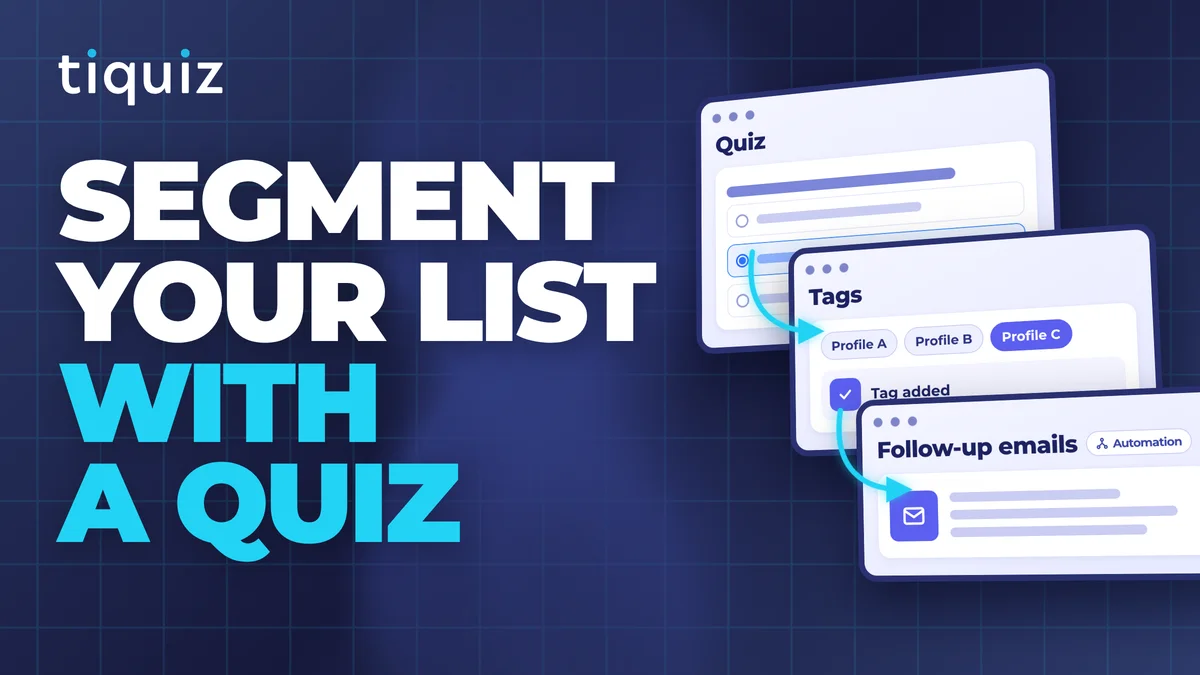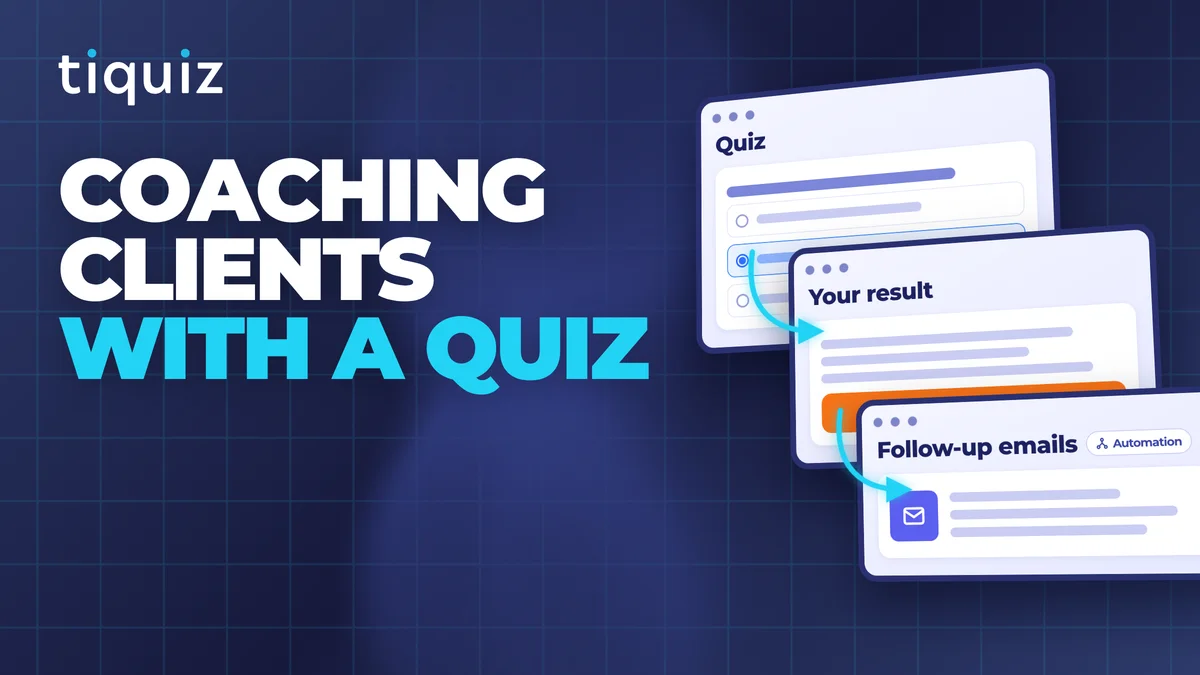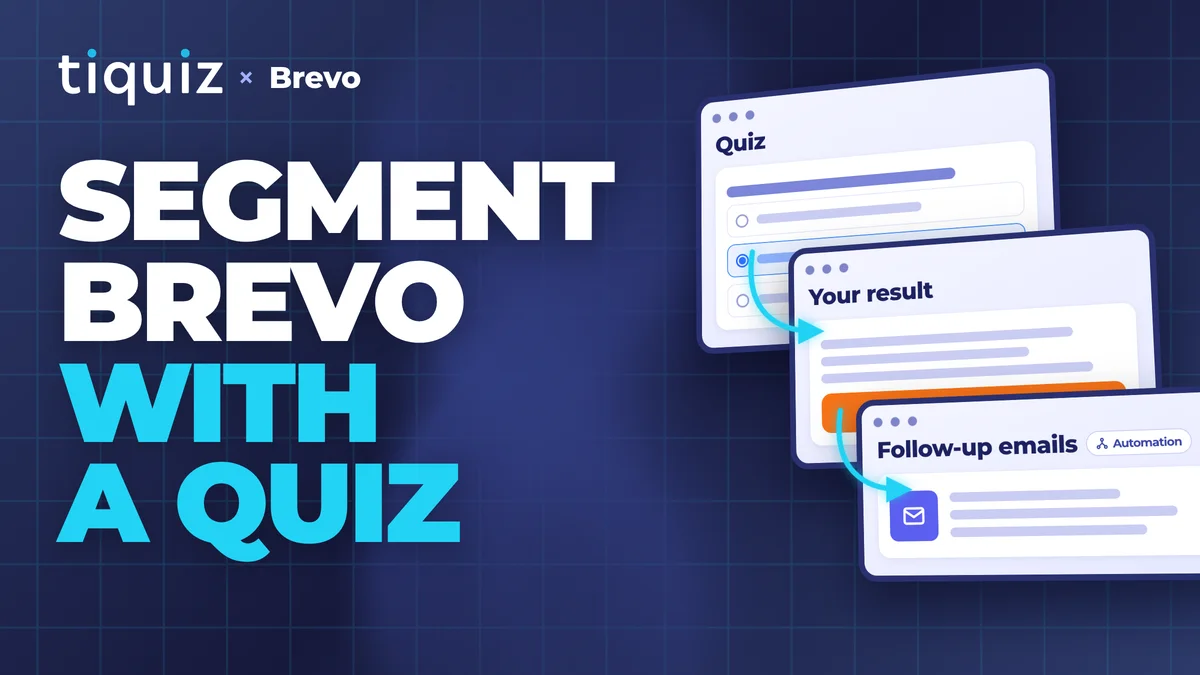
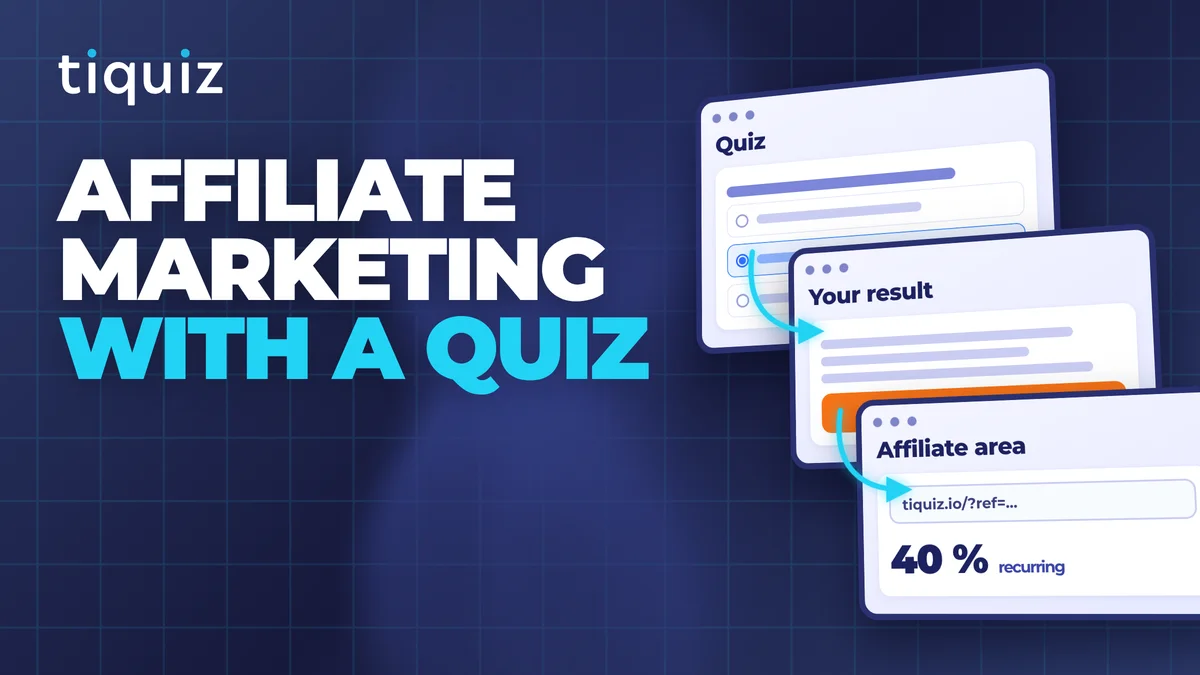
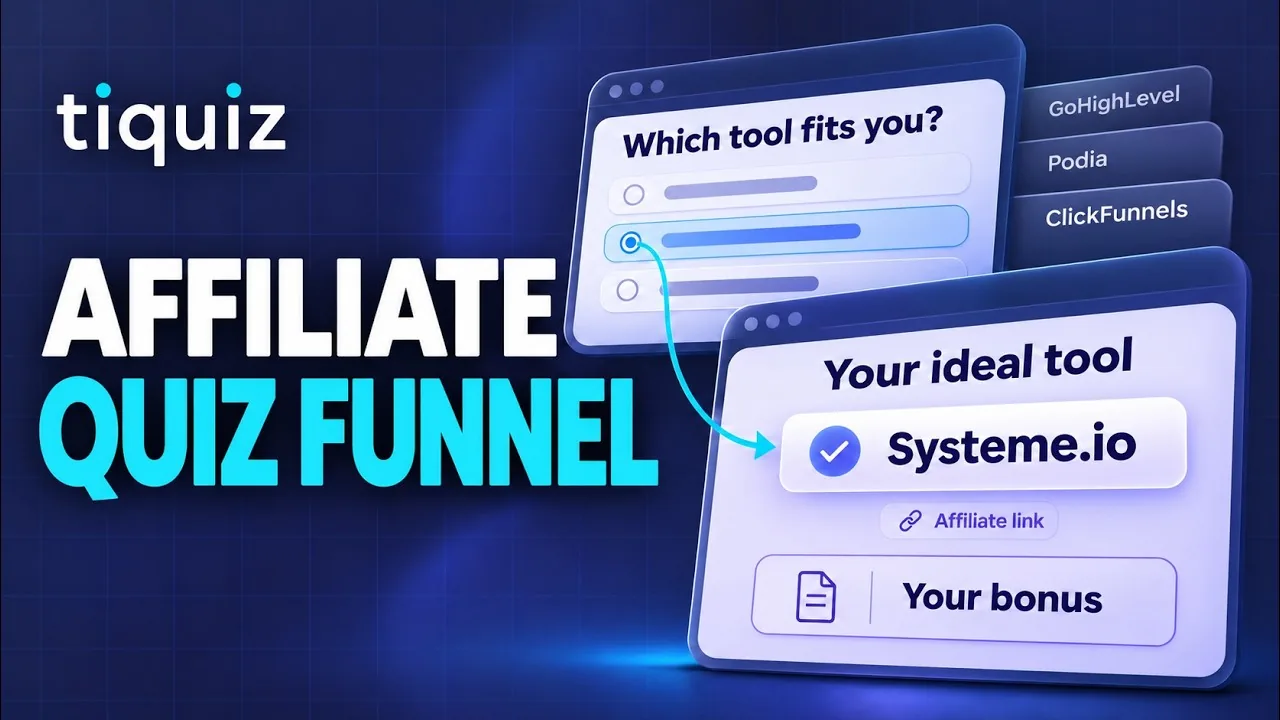
The video shows Gabriel's quiz in a few minutes. This article walks through each step so you can build your own, with any affiliate program: which products to put in the quiz, which questions to ask, what to write in each result, how to disclose your link, where to share the quiz and which emails to send afterward.
If the term "quiz funnel" is new to you, start with the definition and the research that explains why it works.
The problem: everyone drops the same link
Gabriel is an affiliate. He recommends four tools: Systeme.io, GoHighLevel, Podia and ClickFunnels. His audience: coaches and consultants who want to sell an online course on top of their services.
They all ask him the same question: "Which tool should I pick?"
Most affiliates answer in one of two ways:
- they drop their link, the same one for everybody, under every question;
- they remake the tutorial ten other affiliates already published about the same tool.
Either way, the question stays unanswered. Because the right answer depends on the person: their needs, their budget, how comfortable they are with tech. The perfect tool for someone starting on a tight budget is not the one for someone whose offer already sells.
A link dropped in a comment has a second flaw: the person who clicks without buying is gone. You don't know who they are, and you can't write to them again.
Gabriel does something else. Instead of pushing one tool, he helps each person choose theirs. With a quiz.
The principle: a personality quiz, one result per product
A personality quiz works like an advisor who asks a few questions before recommending anything. Each answer counts toward one of the products. At the end, the product with the most answers gives the result.
Gabriel's quiz has four results, one per tool. Four people answer, and each one leaves with theirs:
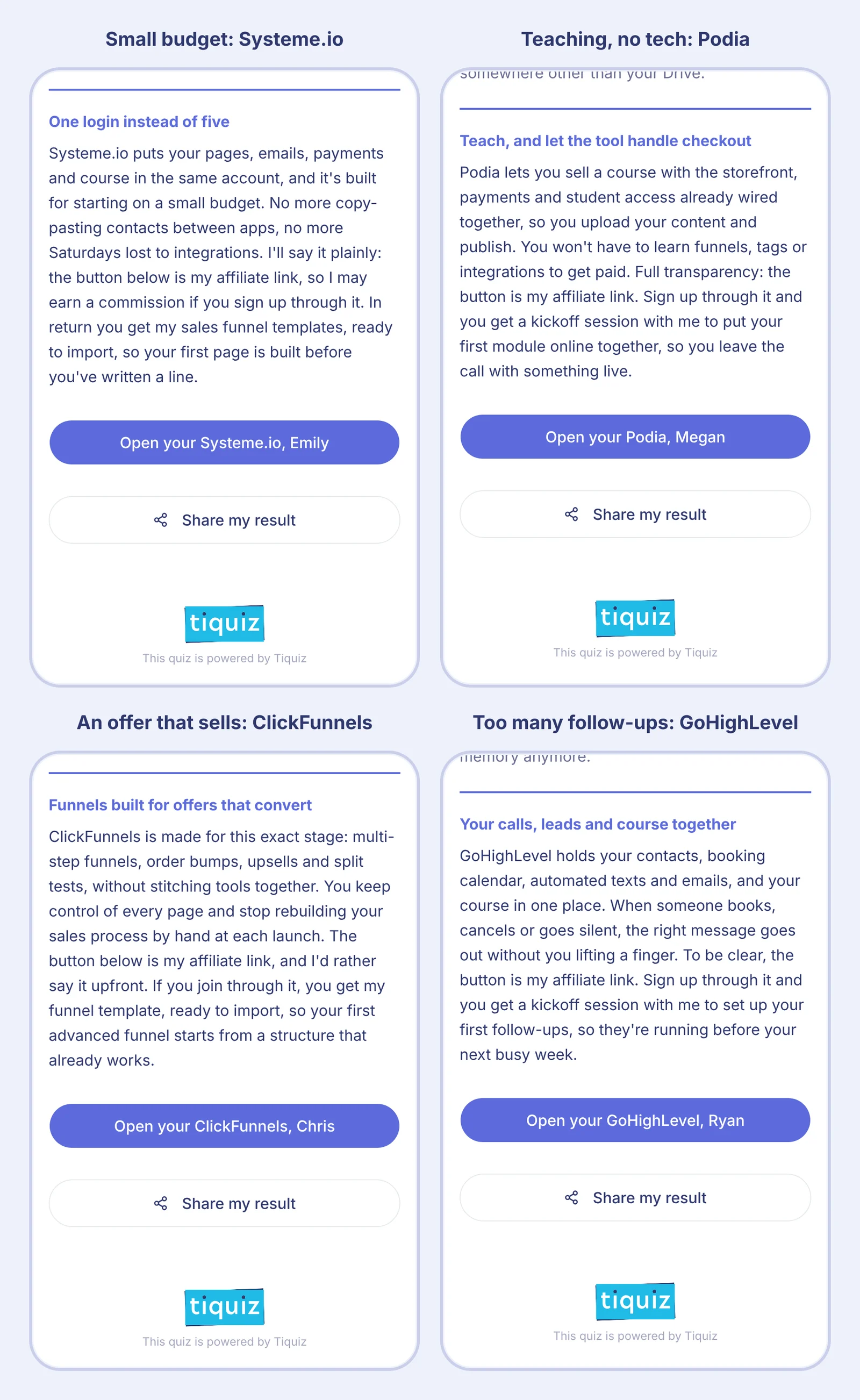
| The result | Who lands on it | Gabriel's bonus | The tag applied |
|---|---|---|---|
| Systeme.io | Emily has a course idea and a small budget | His sales funnel templates, ready to import | tool-systeme-io |
| Podia | Megan wants to teach, with no tech | A kickoff session to put her first module online | tool-podia |
| ClickFunnels | Chris already has an offer that sells | His funnel template, ready to import | tool-clickfunnels |
| GoHighLevel | Ryan is always chasing follow-ups | A kickoff session to set up his first follow-ups | tool-gohighlevel |
The same quiz, and four different landings. Gabriel read none of the answers and picked no tool by hand: the answers decide.
You may be wondering whether you need a personality quiz or a scored quiz. The rule is simple: if your products sit side by side (each one answers a different need), use a personality quiz. If they form a staircase (people take one before the next), use a score, as in Thomas's example with his three courses. Both mechanics are detailed on the personality or scored quiz page.
Why a quiz beats an affiliate link on its own
Four reasons, and none of them is magic.
- The person gets an answer to their question. They asked "which one should I pick?" A link doesn't answer that. A result that says "here's where you stand, here's what's holding you back, here's the tool that fixes it" does.
- The recommendation is credible. A quiz that can point to four different tools isn't an ad for one of them. When the result lands on Podia, the person knows it wasn't written in advance.
- You keep the contact. The quiz asks for an email before showing the result. The person who doesn't sign up that day gets your emails afterward. With a bare link, they were lost.
- You can recommend several programs without contradicting yourself. You no longer say "get this one" on Monday and "get that one" on Thursday. You always say the same thing: "It depends on you. Take the quiz."
One limit, stated up front: this article gives you no commission rate and no income promise. What you earn depends on your programs, your audience and the care you put into your results. The video doesn't put a number on it either.
Gabriel's example: 4 questions, 4 tools
Gabriel is an example built for the video: one affiliate, four tools, an audience of coaches and consultants. His quiz, though, is a real quiz, built in Tiquiz. Its title: "The course platform everyone recommends might be the wrong one for you".
In Tiquiz, he filled in three things:
- who it's for: coaches and consultants who want to sell a course on top of their services;
- the quiz type: personality;
- his four results. To the question "Do you already know which results your quiz should offer?", he answered yes, picked four, then wrote one line per tool: what the result should offer, and its call to action.
The AI wrote the rest: four questions, and one complete result per tool. Here are the questions.
| The quiz question | What it measures |
|---|---|
| Picture your course going live next month. What's the honest budget for the tool behind it? | Their budget |
| Someone sends you a tutorial called "Connect your custom domain in 12 steps." What happens next? | How comfortable they are with tech |
| Right now, what eats most of your week? | Where the real problem is |
| Where does your course stand today? | How far along they are |
Each question has four answers, and each answer counts toward one tool. Take the second one:
| The answer | It counts toward |
|---|---|
| I follow it with a coffee in hand. Slow, but I get there. | Systeme.io |
| I close the tab and hope there's a big Publish button somewhere. | Podia |
| Ten minutes, done. I've built pages and automations before. | ClickFunnels |
| I forward it to my assistant and get back to my calls. | GoHighLevel |
Four things make these questions work:
- They put the person in a situation. "Someone sends you a 12-step tutorial. What happens next?" takes ten seconds to answer. "How technical are you?" measures nothing: everyone says average.
- No answer is embarrassing. "I close the tab" is easy to pick, and yet it's the most useful piece of information in the quiz.
- The answers describe the person, never the product. No tool name shows up before the result. Nobody can answer their way to the one they've heard about.
- Each answer points to a single product. If two answers to the same question lead to the same tool, the quiz leans, and your audience can feel it.
Four questions are enough here, because four criteria are enough to tell these four tools apart. If your products are closer to one another, you'll need one or two more.
What each result needs so the link gets clicked
A result that is just a product name and a button is no better than a link in a comment. The person just answered your questions: they expect you to talk about them. In Tiquiz, every result follows four beats. Here is Emily's, which lands on Systeme.io.
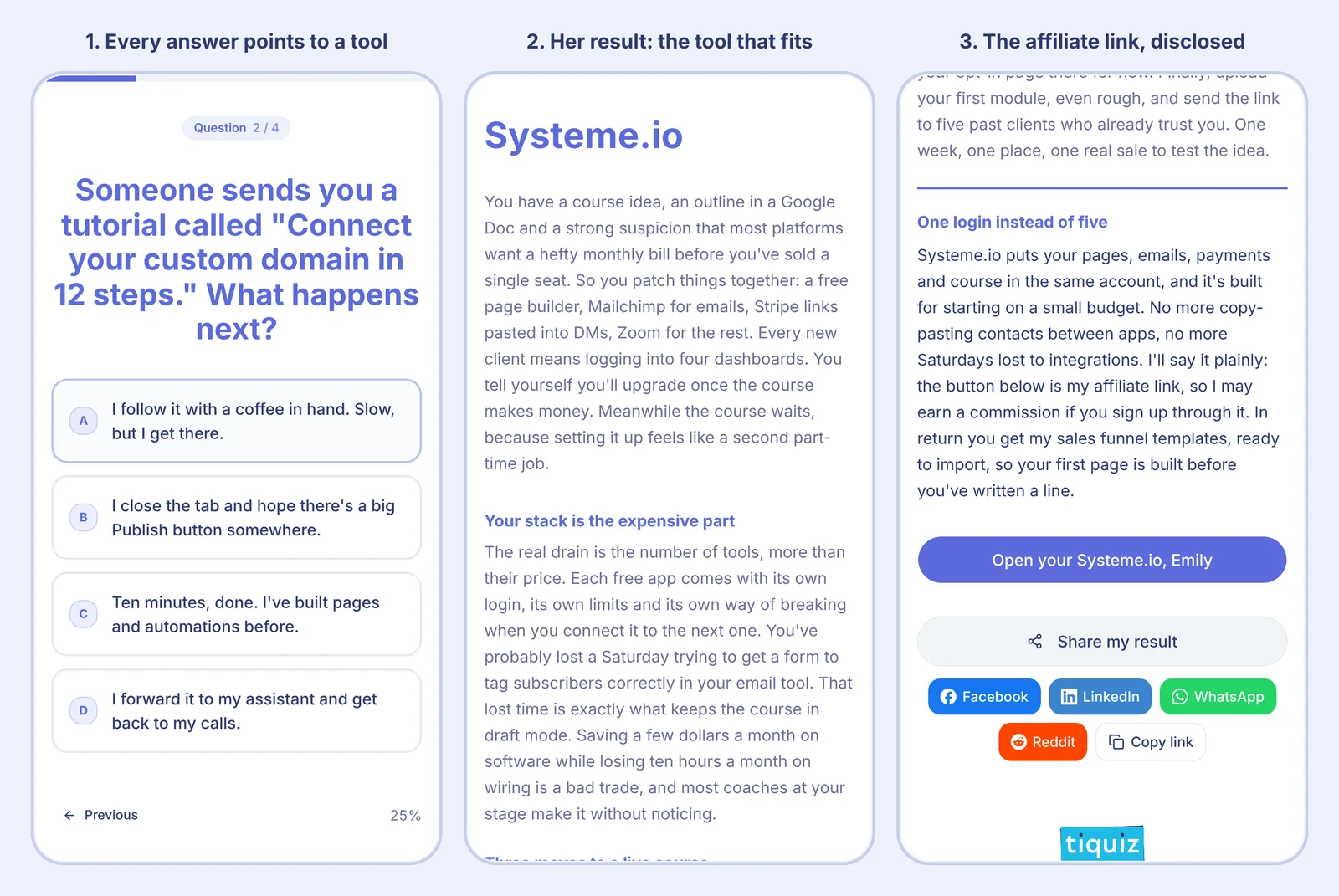
| The beat | Its job | For Emily |
|---|---|---|
| Where you stand | The person recognizes themselves | She patches free tools together, and every new client means logging into four dashboards. |
| Why | They understand the real cause | "Your stack is the expensive part": the number of tools drains her more than their price. |
| One thing to apply | They leave with something useful | "Three moves to a live course": list every tool, pick one platform, upload a first module and send it to five past clients. |
| What's next | The product arrives as the logical next step | "One login instead of five", the affiliate disclosure, the bonus, then the button: "Open your Systeme.io, Emily". |
Look at the order. The product comes last, after advice Emily can apply without buying anything. That advice takes nothing away from the commission: it proves Gabriel knows his subject, and it makes the recommendation credible.
Chris, whose offer already sells, reads something else: his offer outgrew its platform, three things to test on his funnel, then ClickFunnels. Megan reads that the tools she tried were built for someone else, then Podia. Ryan reads that his leads slip away between the first message and the booked call, then GoHighLevel.
The AI writes these texts, and Gabriel reviewed them. That's the step not to skip when you're doing affiliate marketing: every sentence about a product has to be true the day you publish it. A tool changes, a feature disappears, and your name is the one under the recommendation.
Disclosing the affiliate link: the rule, and why it helps you
In each of Gabriel's results, right above the button, there is one sentence in plain words. Here are three of his:
- "I'll say it plainly: the button below is my affiliate link, so I may earn a commission if you sign up through it."
- "Full transparency: the button is my affiliate link."
- "The button below is my affiliate link, and I'd rather say it upfront."
This is not a courtesy. In the United States, the FTC's Endorsement Guides use the exact case of a blog that includes affiliate links: because the compensation could affect how much weight readers give the review, it should be disclosed clearly and conspicuously (16 CFR Part 255, § 255.5, Example 11). The same text defines "clear and conspicuous" as a disclosure that is difficult to miss and easily understandable by ordinary consumers. In the European Union, the e-commerce directive asks that commercial communications be clearly identifiable as such (Directive 2000/31/EC, Article 6).
Three guidelines for writing it:
- In the same place as the link. Right above the button, not on a "legal" page nobody opens. The Guides give the example of a disclosure placed only on a profile page: people could easily miss it, so it isn't clear and conspicuous.
- In simple words. "Affiliate link" and "I may earn a commission." No abbreviation, no jargon.
- In every result. Each person only reads their own.
And that sentence helps you sell. Someone who finds out later that the advice was paid feels tricked. Someone who is told beforehand, with a bonus on the table, understands the exchange: you helped them choose, they go through your link.
An honest caveat: this article is not legal advice. Rules vary by country, and every affiliate program has its own terms, sometimes with required wording. Read the terms of the programs you recommend.
The bonus: a reason to use your link and not someone else's
Your recommendation is free, and the tool costs the same with or without your link. So people need a reason to click yours. Gabriel gives one in every result:
- when a template can be imported into the tool, he gives his. For Systeme.io: his sales funnel templates. For ClickFunnels: his funnel template;
- when nothing can be imported, he offers a kickoff session. For Podia: putting the first module online together. For GoHighLevel: setting up the first follow-ups.
A good affiliate bonus has three qualities:
- It's used inside the product you recommend. A template to import saves the first evening. A general ebook saves nothing.
- It answers the blocker the result just named. Emily dreads wiring everything together: she gets a funnel that's already built. Ryan loses leads: he gets a session on his follow-ups.
- You can keep delivering it. One session per signup is real time. If your quiz takes off, plan a format you can still offer to the hundredth person: a group session, a video, a template.
Before you promise a bonus, check two things in the program's terms: that it allows bonuses offered by its affiliates, and how you'll know who signed up through your link. Without that, you can't deliver it.
Result sharing: each person brings you more people
On the result page, under the button, there is a second button: "Share my result". The person picks a network, and the message is already written. Gabriel's:
Thanks to this quiz, I finally found the perfect platform for me! It's Systeme.io. What about you: which one should you use for what you need?
The tool name changes with the result, and the link leads to the quiz. In Tiquiz, it takes three moves in the Share tab: one option to turn on, the networks to pick (Gabriel chose Facebook, LinkedIn, WhatsApp and Reddit), one sentence to write.
For an affiliate, that button counts twice. A coach who shares their result shows it to other coaches, the very people asking the same question. And what travels is a quiz, not your affiliate link: it's welcome in places where an affiliate link would not be.
The full mechanics, including a bonus people unlock by sharing, are on the sharing and bonus page.
Where to show your quiz: Facebook groups and Reddit, without spamming
Gabriel doesn't have a big audience. He goes where the people asking the question already are: Facebook groups and subreddits for coaches, consultants and course creators.
His method comes down to four rules:
- He answers first. He helps, gives his opinion, goes into detail. No link.
- He waits for the question. When someone asks which tool to pick, he writes: "I actually have a quiz for that."
- Where links aren't allowed, he doesn't post one. Interested people ask him for it. Read each community's rules before you write: they differ from one group to the next, and a banned account recommends nothing.
- He keeps the quiz one click away. On Facebook, he pinned it to his profile and put the link in his bio. Someone who reads one of his answers and visits his profile finds it.
It works because the quiz is help before it is promotion. "Take this quiz, it will tell you which one fits" is a useful answer to the question asked. "Here's my link" is not.
The same rules apply elsewhere: your newsletter, your Instagram or LinkedIn bio, your video descriptions, the end of your articles.
After the quiz: one tag per product, one campaign per tag
The result recommends the product once. The emails do the rest, because few people switch tools the day they take a quiz.
Gabriel connected Tiquiz to Systeme.io, once. Since then, everyone who answers shows up in his contacts with the tag for their tool:
| The tag | Applied when | What it triggers |
|---|---|---|
| tool-systeme-io | The result is Systeme.io | The Systeme.io campaign: the result, the bonus, then help getting started |
| tool-podia | The result is Podia | The Podia campaign |
| tool-clickfunnels | The result is ClickFunnels | The ClickFunnels campaign |
| tool-gohighlevel | The result is GoHighLevel | The GoHighLevel campaign |
In Systeme.io, he created one rule per tag: when the tag is added, the person enters an email campaign. Tiquiz gives you the exact list of tags in each quiz's Automate tab: you have nothing to invent or retype from memory.
What his emails say:
- The first one reminds the person of their result and their bonus, with the link.
- The next ones help them get started with the tool: where to begin, what to ignore the first week.
- A follow-up goes to the people who didn't click.
Every email that contains the link says again that it's an affiliate link. The rule for the result page applies in the inbox too.
Three ways to send those emails, depending on your tools:
- Systeme.io: one automation rule per tag. The step by step is in the 5 rules to create for every lead;
- GoHighLevel: same principle, with one workflow per tag. See the 5 workflows to build so a quiz actually sells;
- no email marketing tool: Tiquiz sends the emails itself, one sequence per result, written by the AI and reviewed by you. See follow-up emails.
The complete template for a sequence, email by email, is in the post-quiz email sequence.
Look at what this changes for Gabriel. He no longer repeats the same answer under every question. He recommends the right tool to the right person, with a bonus and emails. And since these tools are sold by subscription, a commission can come back every month: check each program's page, because terms differ and change.
What about the Tiquiz affiliate program?
The method in this article works with any program. But Gabriel's quiz also carries, without him doing anything, a fifth affiliate link.
At the bottom of every quiz, there is a line: "This quiz is powered by Tiquiz". That link is tied to the affiliate account of the person who created the quiz, automatically. On a paid plan, Gabriel could remove that line. He keeps it, and here is what it pays, as the program defines it:
- 40% of every payment, for as long as the person stays subscribed to Tiquiz;
- a rate that climbs by steps, up to 70%, with the number of referrals who pay;
- a one-year cookie;
- a payout 30 days after the referral pays, from $20;
- one free month for the person who subscribes through that link. That's the bonus, and you have nothing to deliver.
For someone whose audience is made of coaches and course creators, that isn't a footnote: some of the people who take the quiz will want to build their own. The program is described on the affiliate page, and the logic of recurring commissions in this article.
Build yours in six steps
- List the products you already recommend, and write down who each one is for. Two to five. If you can't say in one sentence who a product is for, it doesn't belong in the quiz.
- Write the question your audience asks before they buy. "Which tool should I pick?", "Where do I start?", "Which one is right for me?" That's the title of your quiz.
- Find what sets your products apart: budget, level, comfort with tech, goal. One criterion per question.
- In Tiquiz, describe your audience, choose the personality type, answer yes to "Do you already know which results your quiz should offer?" and write one line per product. The AI writes the questions and the results. The step by step is in create a quiz with AI.
- Review every result: is what it says about the product true today? Is the affiliate disclosure right above the button? Is the bonus clear? Then take the quiz once per product, and check that each path lands in the right place.
- Connect what comes next: turn on result sharing, connect your email tool or Tiquiz's own emails, one sequence per result. Then put the quiz in your bio.
If you don't recommend software, the principle is the same. Here is something to start from:
| You recommend | Your quiz question | What sets them apart |
|---|---|---|
| Email marketing tools | Which tool for my first newsletter? | List size, budget, need for automation |
| Web hosting | Which hosting for my site? | Type of site, expected traffic, comfort with tech |
| Video gear | Which microphone should I start with? | Recording space, budget, video format |
| Courses | Which course should I start with? | Level, available time, goal |
| Books | Which book should I read first? | Current problem, reading time, taste for theory |
The 5 mistakes that make an affiliate quiz fail
- A quiz that always leads to the same product. If every path lands on the tool that pays the most, your audience figures it out on the second try. Trust goes, and the clicks go with it.
- A hidden affiliate link. A missing disclosure, or one buried on a page nobody opens. It wrongs the person, and it puts your affiliate account at risk.
- Recommending a product you don't know. The result describes what the tool does. If that's wrong, you're the one who said it.
- A result that only talks about the product. The feature list is on the tool's website. Your result talks about the person, their blocker, then the product.
- Stopping at the result. With no emails behind it, the person who doesn't sign up right away is lost, exactly as with a link dropped in a comment.
When a quiz won't help you earn commissions
A quiz isn't the right answer to everything.
- You recommend a single product, and it suits everyone. There's nothing to choose. Keep the personality quiz, but for another job: the product stays the same, and each profile discovers it from the angle that matters to them. The method is in sell with a quiz.
- Your products have nothing in common. A quiz answers one question. A microphone, a course and invoicing software don't fit in the same one.
- You can't say who each product is for. The quiz won't know it for you. Start by using the tools, or by asking people who use them.
- The program forbids what you want to do. Some set rules on bonuses, emails or the places where the link can appear. Read the terms before you build.
- Nobody sees your quiz. A quiz converts visitors, it doesn't create them. Go where the question gets asked.
The question to ask yourself tonight
One quiz, four tools, and each person leaves with the one that fits them, a bonus and the emails that go with it. Gabriel no longer has to push a link: he helps people choose, and the link shows up at the moment the person knows why they're clicking.
So ask yourself one question: what does your audience ask you before they buy?
That question is your quiz.
Write my quiz in a few sentences
FAQ · affiliate marketing with a quiz
How do you do affiliate marketing with a quiz?
You pick two to five products you recommend, write questions that tell them apart (budget, level, goal), and tie each answer to a product. The result explains why that product fits the person, discloses your affiliate link and offers a bonus. One tag per result then triggers the emails for the right product.
Do I have to say the link in the result is an affiliate link?
Yes, right above the button and in simple words. In the United States, the FTC's Endorsement Guides say compensation from affiliate links should be disclosed clearly and conspicuously, meaning in a way that is difficult to miss (16 CFR Part 255). In the European Union, commercial communications must be clearly identifiable as such (Directive 2000/31/EC, Article 6). These two texts are a starting point, not legal advice: check the rules in your country and the terms of each program.
How many products can one quiz recommend?
Two to five. In Tiquiz, you choose that number when you create the quiz and write one line per result. Gabriel has four. Beyond five, the questions can no longer tell the products apart, and the results start to look alike.
How many questions do I need?
As many as there are criteria that set your products apart, usually four to seven. Gabriel's quiz has four. A short quiz gets finished: on quizzes built with Tiquiz, 78.8% of people who start a quiz finish it (our numbers across 4,354 quiz starts). That figure covers all quizzes, not only affiliate quizzes.
Does it work with a single affiliate program?
Yes, if the program has several products or several plans: the quiz points to the right one. With a single product, the quiz no longer chooses anything, but it can present that product from the angle that matters to each profile. Either way, plan an honest result for the person the product doesn't suit.
Where should I share an affiliate quiz?
Where the question gets asked: Facebook groups, subreddits, your newsletter, your bio. In a group, answer questions first, and only bring up the quiz when someone asks what to choose. Where links aren't allowed, don't post one: keep the quiz pinned to your profile and in your bio.
Does it work without an email marketing tool?
Yes. Tiquiz captures the email, keeps every contact and sends one sequence per result itself. If you already use Systeme.io or GoHighLevel, each contact lands there with the tag for their result, and you send your emails from your own tool.
Can I do this on the free Tiquiz plan?
To test it, yes: the free plan gives you one quiz (personality or scored), AI writing, result sharing, one connection to your tool, 10 visible leads per 30 days and one follow-up email per result. To remove the Tiquiz line, lift the lead limit and send up to 5 emails per result, you need a paid plan, from $17 a month. The details are on the pricing page.